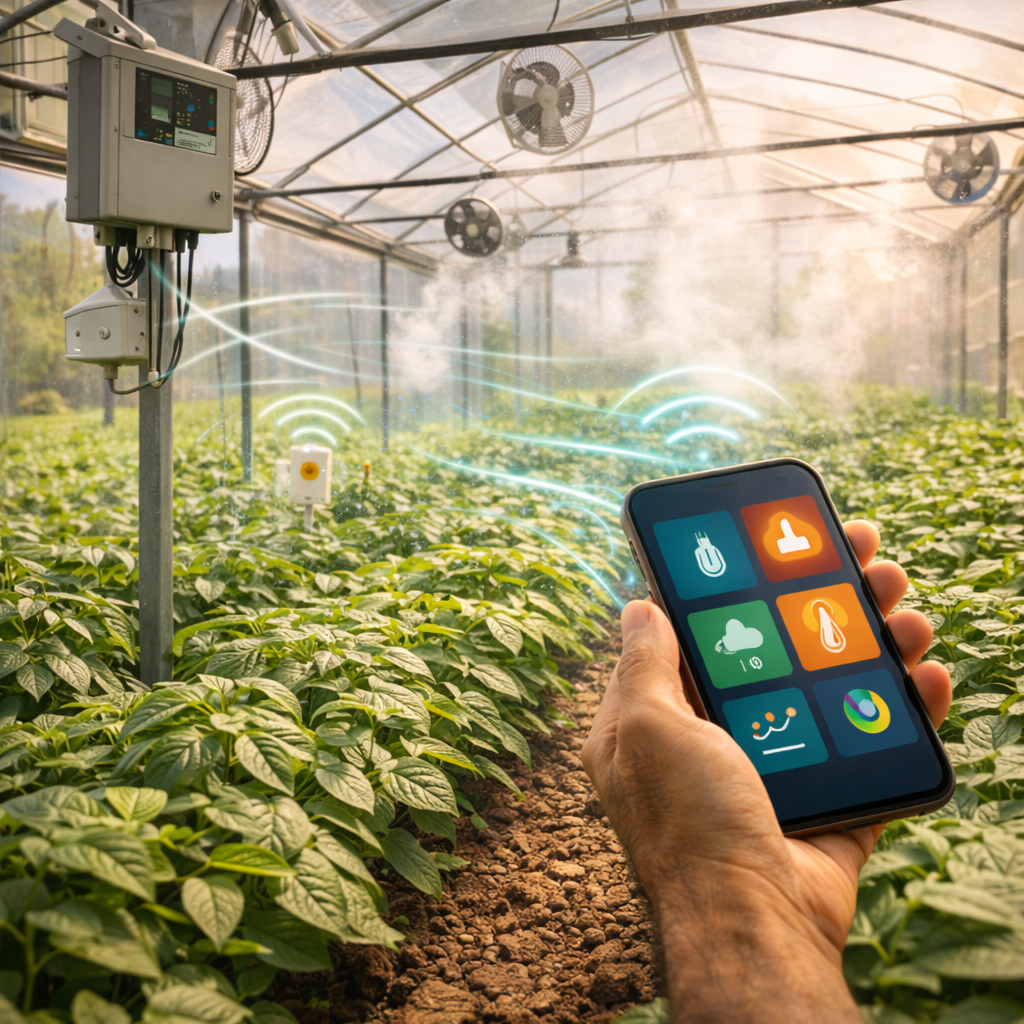
Role of Embedded Systems & Telemetry Solutions in Agriculture
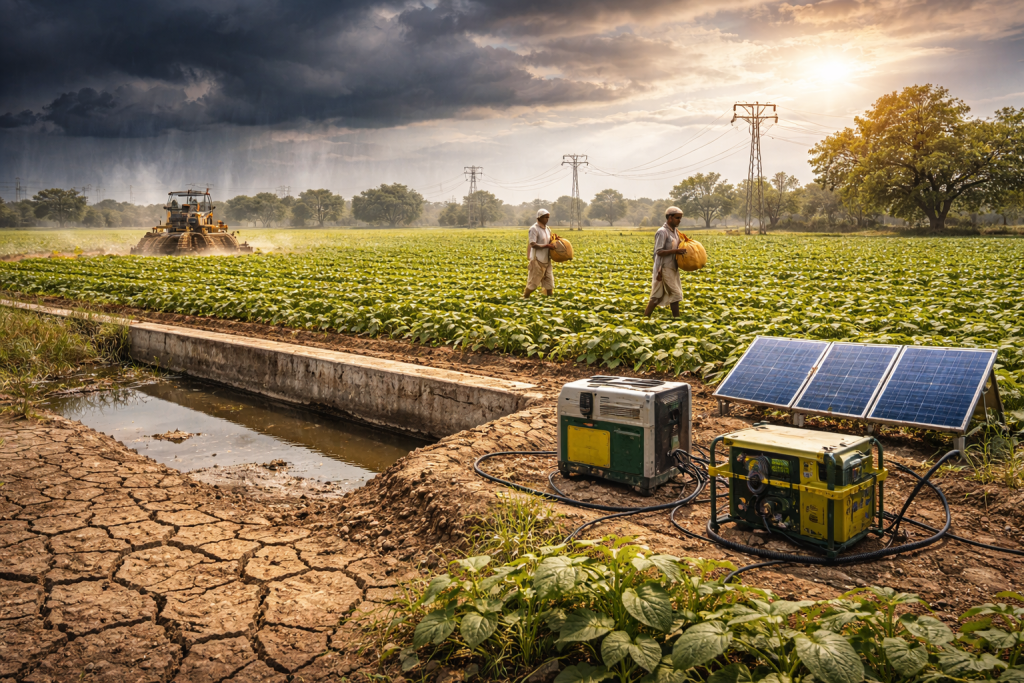
Agriculture has always played an important role in India’s economy. Even today, millions of people depend on farming for their daily income. However, traditional farming methods are no longer sufficient to meet modern challenges, such as water shortages, climate change, and rising costs. As a result, smart agriculture in India is gaining increasing importance. Smart agriculture uses modern technology to improve farming efficiency and productivity. In this transformation, embedded systems and telemetry solutions play a key role. These technologies help farmers monitor, control, and automate agricultural operations in a simple and reliable way.
In this blog, we will explain how embedded systems and telemetry solutions support smart agriculture in India and how companies like Sai AgroTel are helping farmers adopt these technologies.
Understanding Smart Agriculture
Smart agriculture, also called precision farming, focuses on using technology to make better farming decisions. Instead of depending only on experience, farmers can now use real-time data to manage crops and resources more effectively.ullamcorper mattis, pulvinar dapibus leo.
In general, smart agriculture aims to:
Use water and energy efficiently
Monitor crops more accurately
Reduce manual effort
Increase crop yield
Support sustainable farming
To achieve these goals, technologies like sensors, controllers, and communication systems are required. Therefore, embedded systems and telemetry solutions become essential.
What Are Embedded Systems?
An embedded system is a small computer designed to perform a specific task inside a device. Unlike regular computers, embedded systems work continuously without user interaction.
In agriculture, embedded systems are commonly used in:
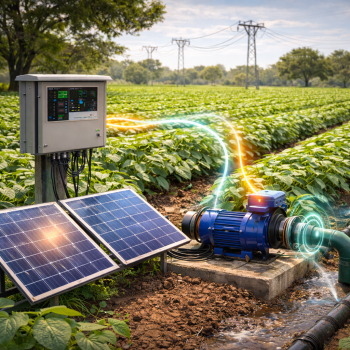
Irrigation controllers
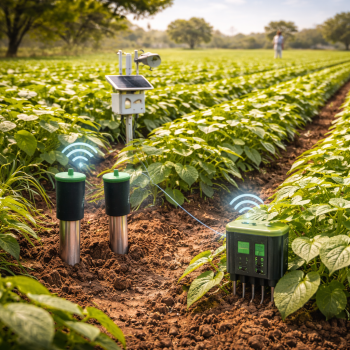
Soil moisture monitoring devices
Weather stations
Pump and motor control units
These systems collect data from sensors, process the information, and take action automatically. As a result, farming operations become more efficient and reliable.
What Are Telemetry Solutions?
Telemetry solutions allow data to be transmitted from remote agricultural fields to a central system. In simple terms, telemetry helps farmers monitor their farms even when they are not physically present.
Typically, telemetry solutions include:
Wireless communication (GSM, LoRa, or internet)
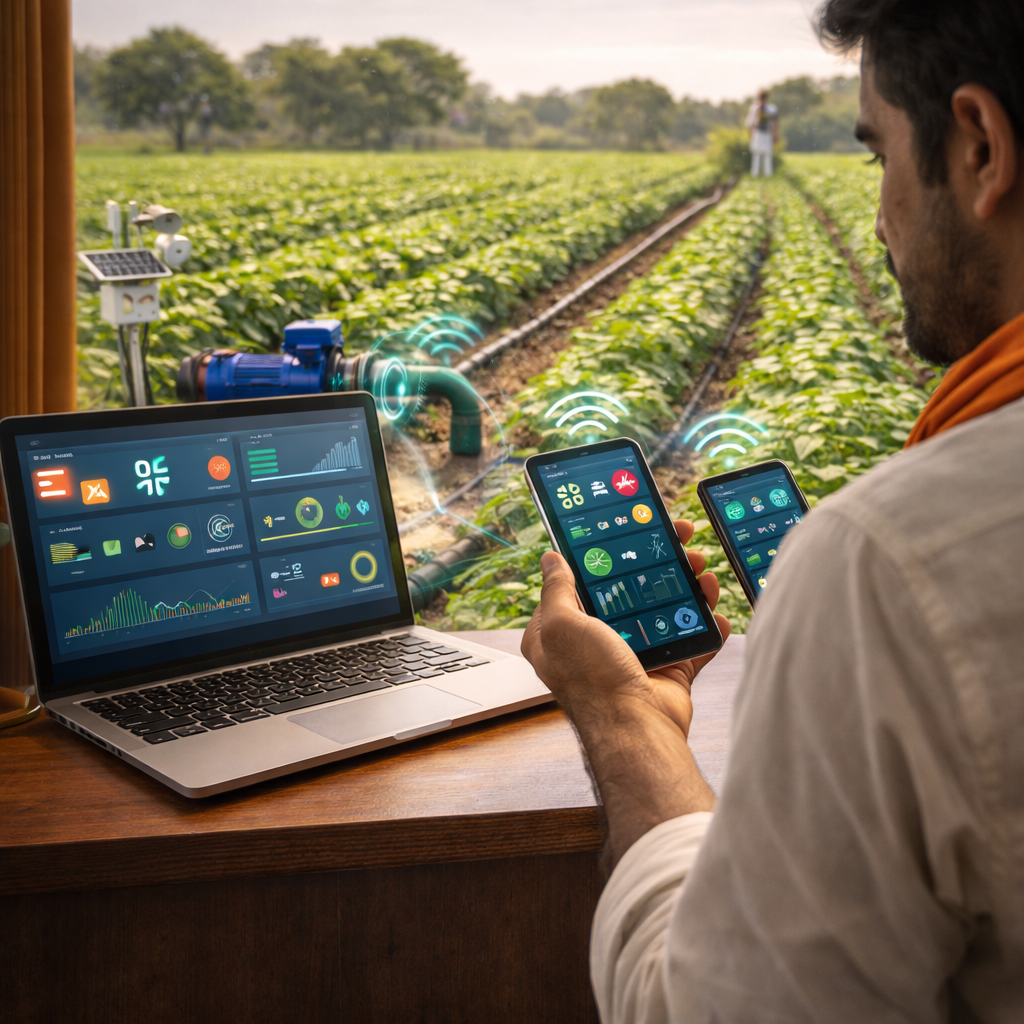
Remote dashboards or mobile apps
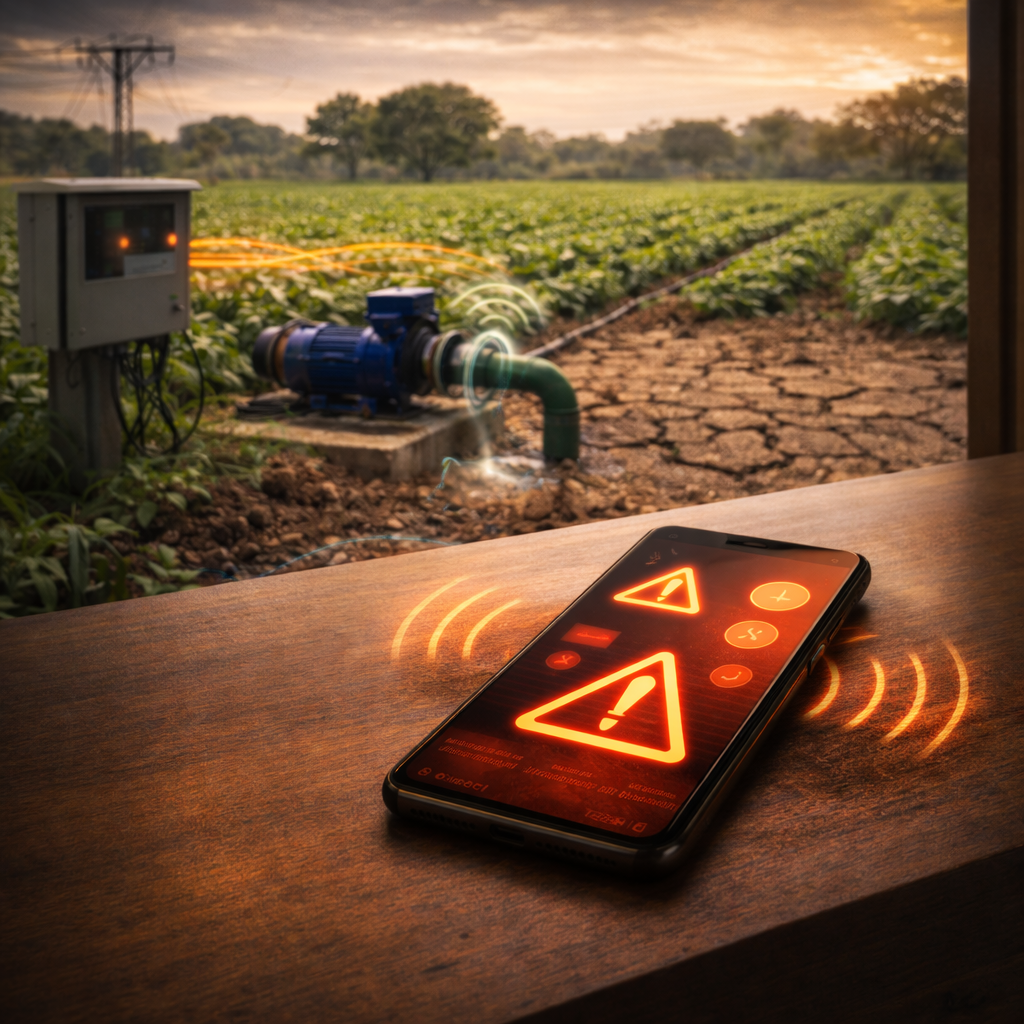
Alerts and notifications
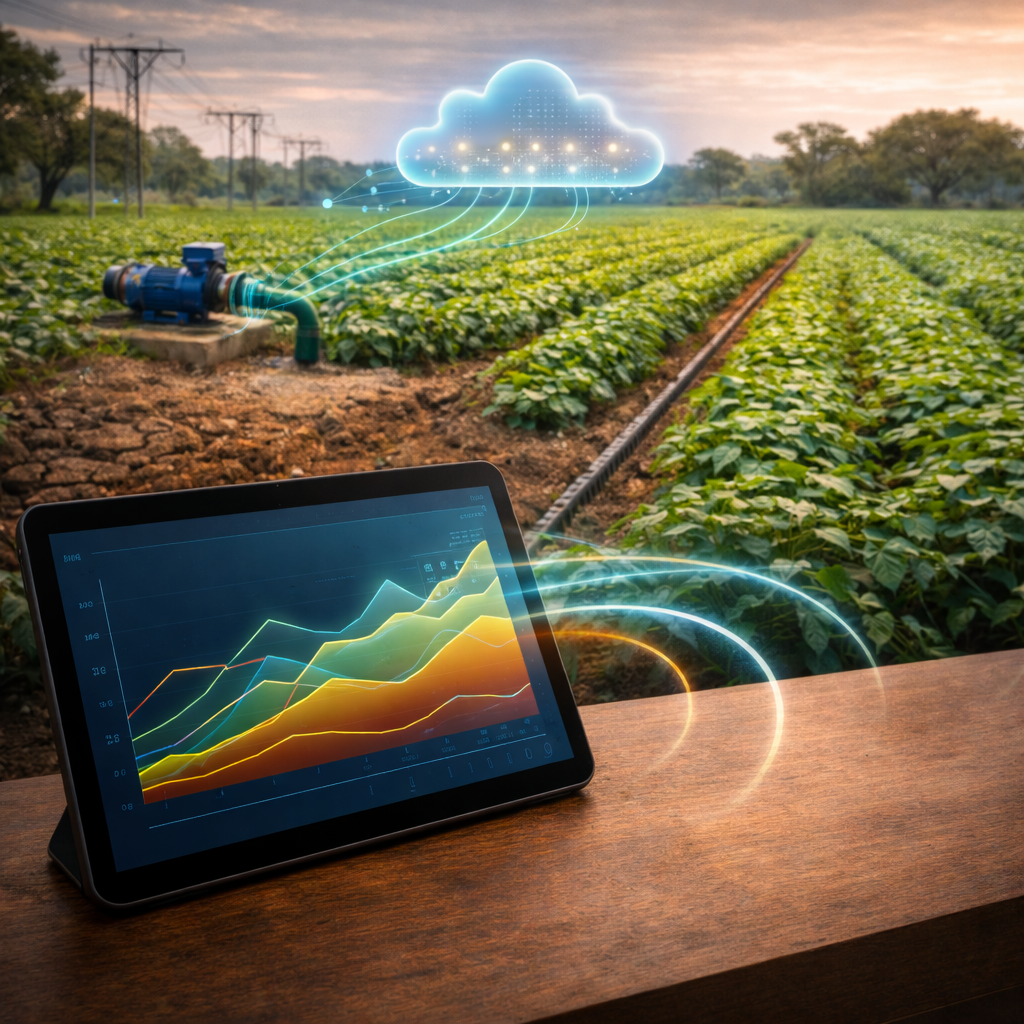
Cloud-based data storage
When telemetry is combined with embedded systems, farmers gain complete visibility and control over their operations.
Why Smart Agriculture Is Important for India
India faces several agricultural challenges today. Because of population growth and climate change, farming has become more complex.
Some key challenges include:
Water scarcity
Unpredictable weather
High labor costs
Power availability issues
Due to these reasons, farmers need smarter tools to manage resources effectively. Embedded systems and telemetry solutions help address these challenges by providing automation and real-time monitoring.nec ullamcorper mattis, pulvinar dapibus leo.
Role of Embedded Systems in Smart Agriculture
Embedded systems form the backbone of smart agriculture solutions. They connect sensors, controllers, and communication modules into one working system.
1. Smart Irrigation Management
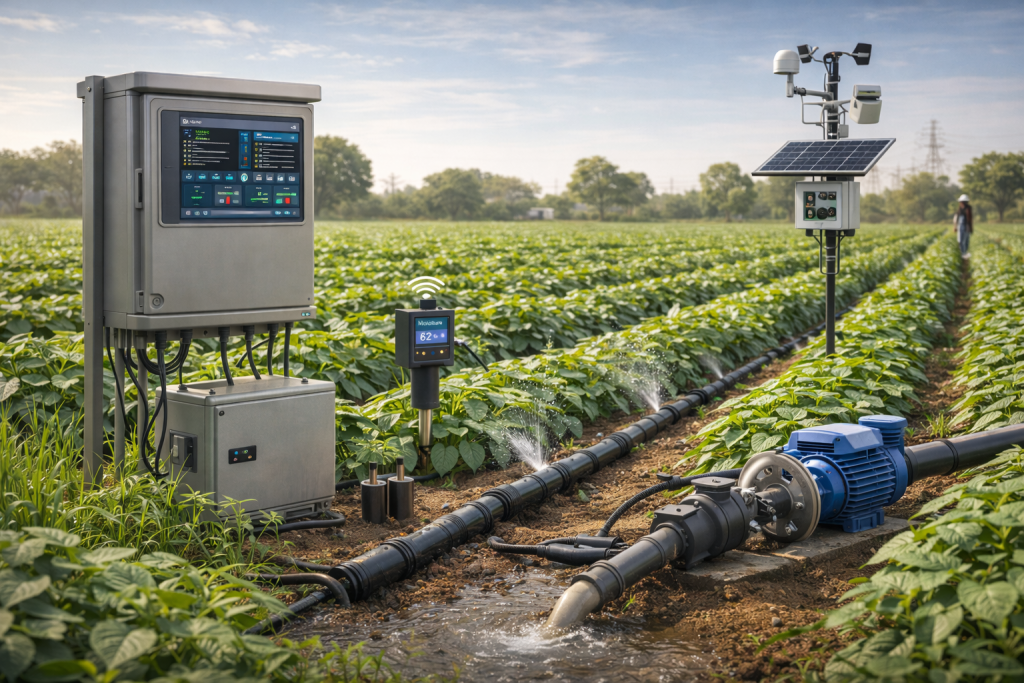
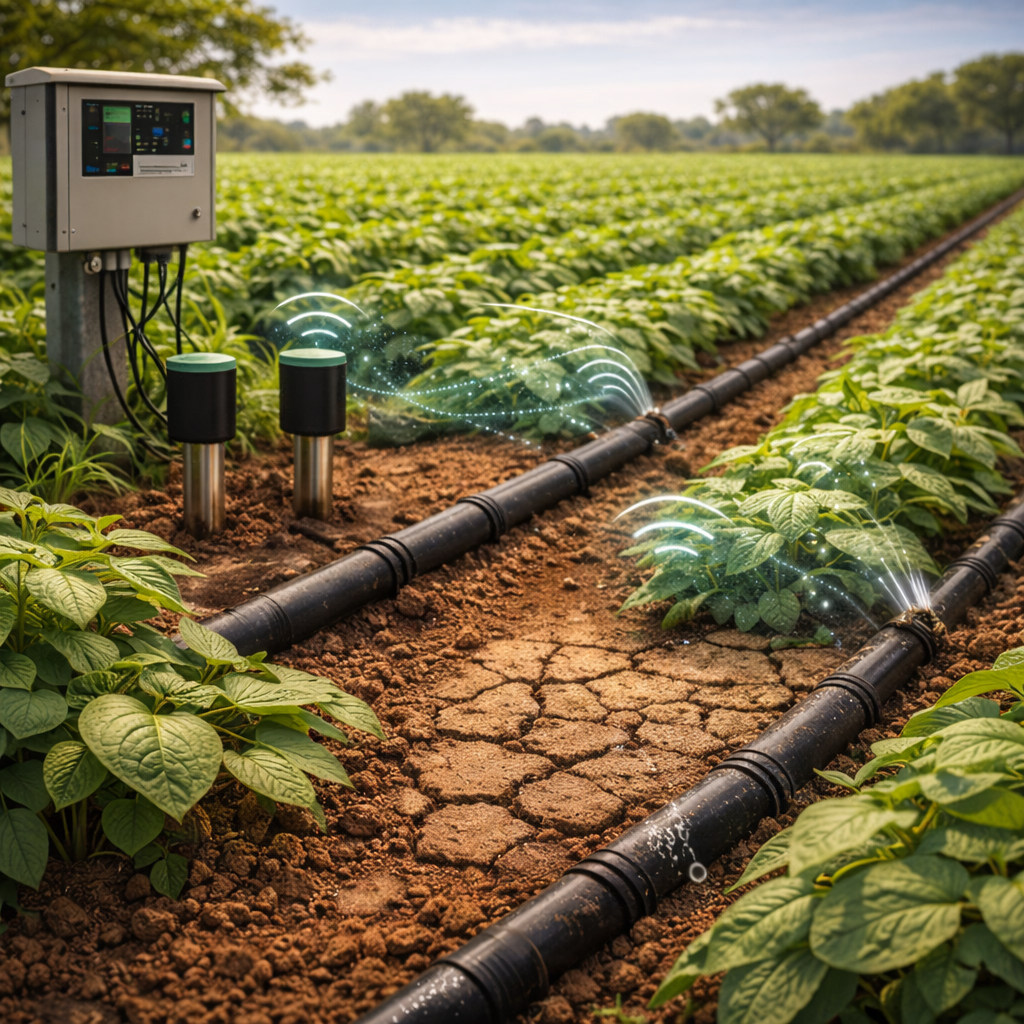
Water management is critical in agriculture. Traditional irrigation methods often lead to water wastage. However, embedded systems help optimize irrigation by monitoring soil moisture.
As a result:
Pumps operate only when required
Over-irrigation is avoided
Water and electricity are saved
This leads to healthier crops and reduced costs.
2. Soil and Crop Monitoring
Soil quality directly impacts crop growth. Embedded systems connected to sensors continuously monitor soil conditions.
For example, they can measure:
Soil moisture levels
Temperature
Environmental conditions
With this information, farmers can take timely action and avoid crop stress.
3. Automation of Farm Equipment
Embedded controllers are widely used to automate farm equipment. For instance, pumps and motors can be controlled automatically without manual intervention.
Because of automation:
Human errors are reduced
Operations become consistent
Time and effort are saved
This improves overall farm efficiency.
4. Energy Management
Many farms rely on electricity or solar power. Embedded systems help manage energy usage by monitoring power conditions and switching loads efficiently.
Consequently, energy consumption is optimized, and operating costs are reduced.
Role of Telemetry Solutions in Smart Agriculture
While embedded systems work locally, telemetry solutions extend their capability by enabling remote access.
1. Remote Monitoring
With telemetry, farmers can monitor farm operations using mobile phones or computers. For example, they can check irrigation status or sensor readings remotely.
This is especially useful for large farms or distant fields.
2. Real-Time Alerts and Notifications
Telemetry systems can send alerts during abnormal conditions such as:
Pump failure
Low soil moisture
Power issues
Because of these alerts, farmers can act quickly and prevent losses.
3. Data-Based Decision Making
Telemetry systems store historical data. Over time, this data helps farmers analyze trends and improve planning.
As a result:
Irrigation schedules become more accurate
Resource usage is reduced
Crop yield improves
4. Centralized Farm Management
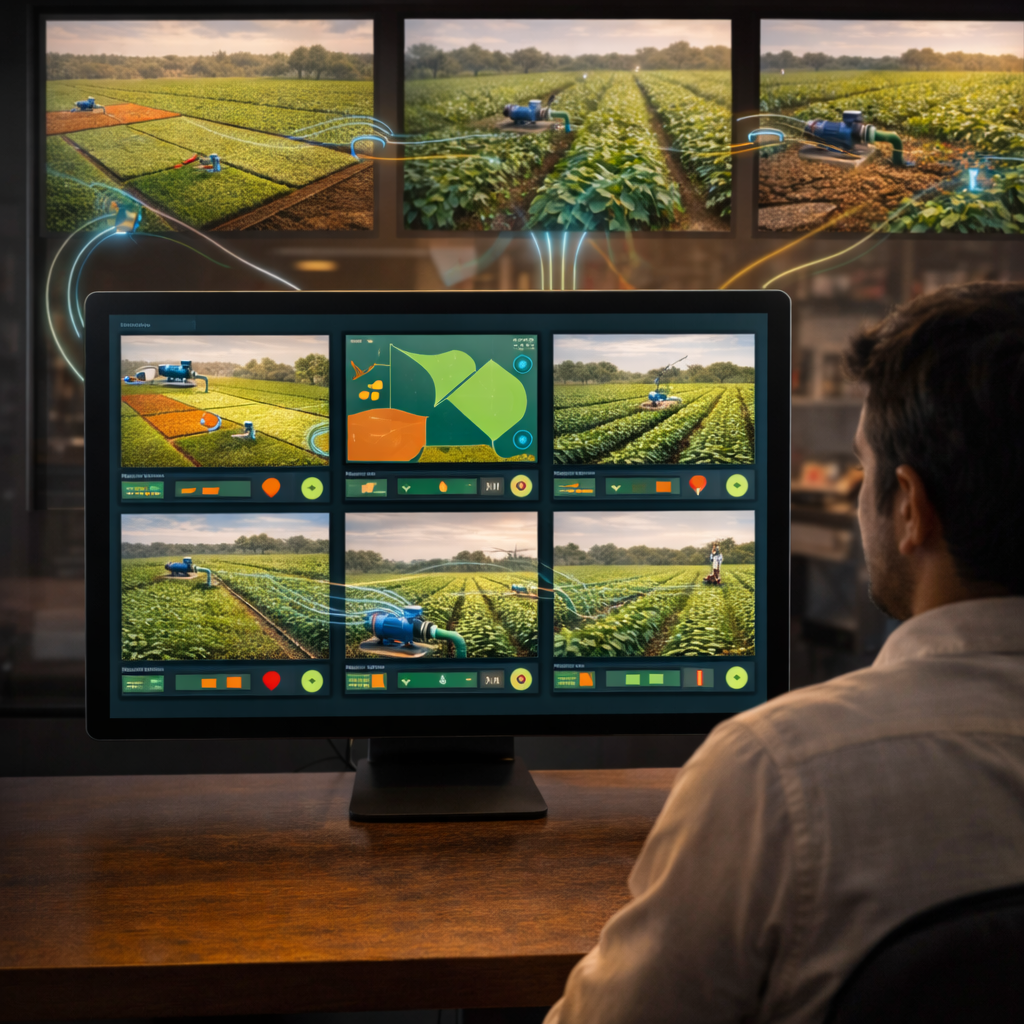
Telemetry dashboards allow multiple fields or farms to be monitored from a single platform. Therefore, managing large agricultural operations becomes easier.
Combining Embedded Systems and Telemetry Solutions
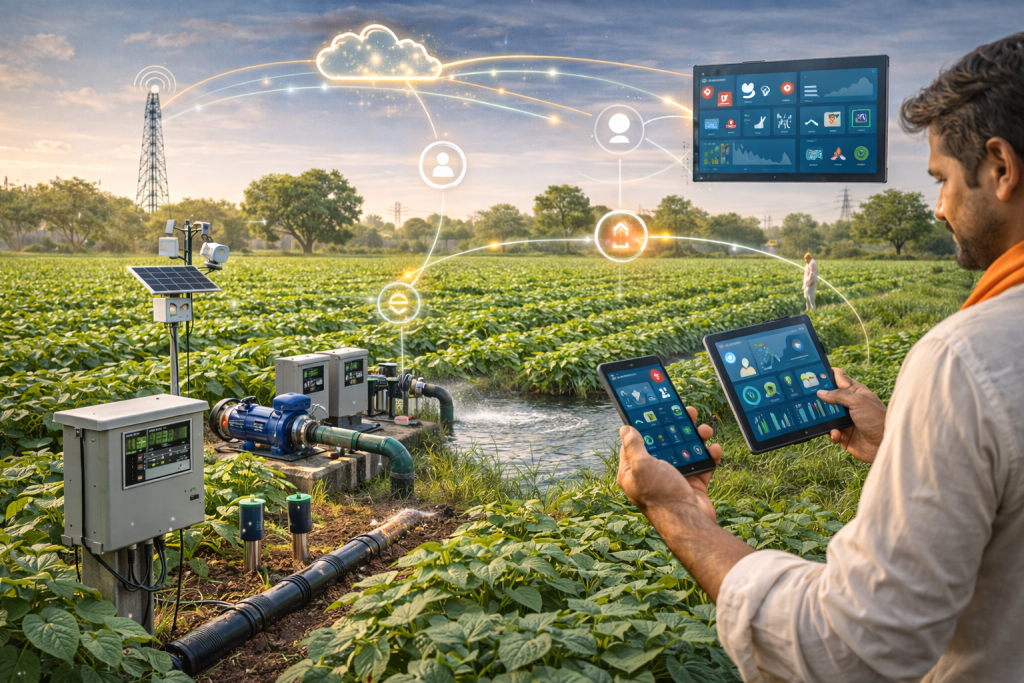
The true value of smart agriculture comes from combining embedded systems with telemetry solutions.
In a typical setup:
Sensors collect data
Embedded controllers process information
Telemetry sends data to the cloud
Farmers view insights remotely
Together, these technologies create a connected and intelligent farming system.
Smart Agriculture Use Cases in India
1. Drip Irrigation Automation
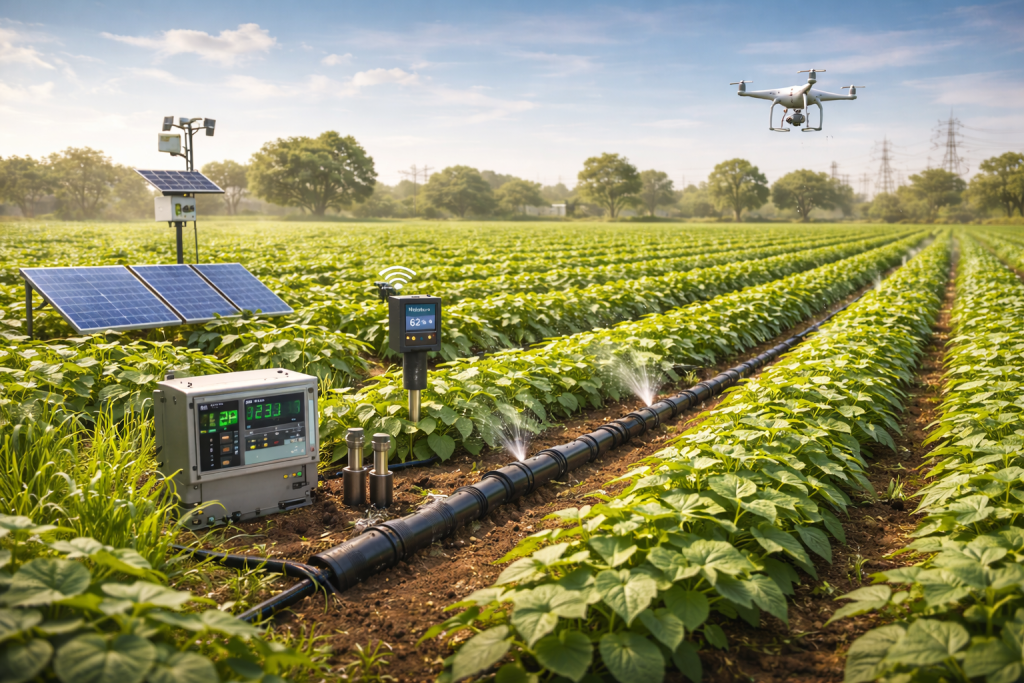
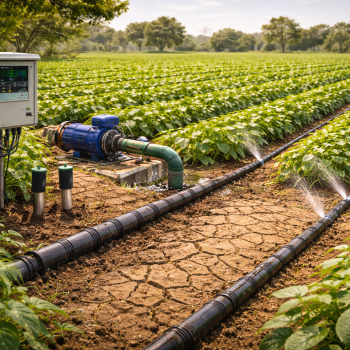
Smart drip irrigation systems use embedded controllers and telemetry to deliver water precisely. As a result, water usage is minimized, and crop yield improves.
2. Weather Monitoring Stations
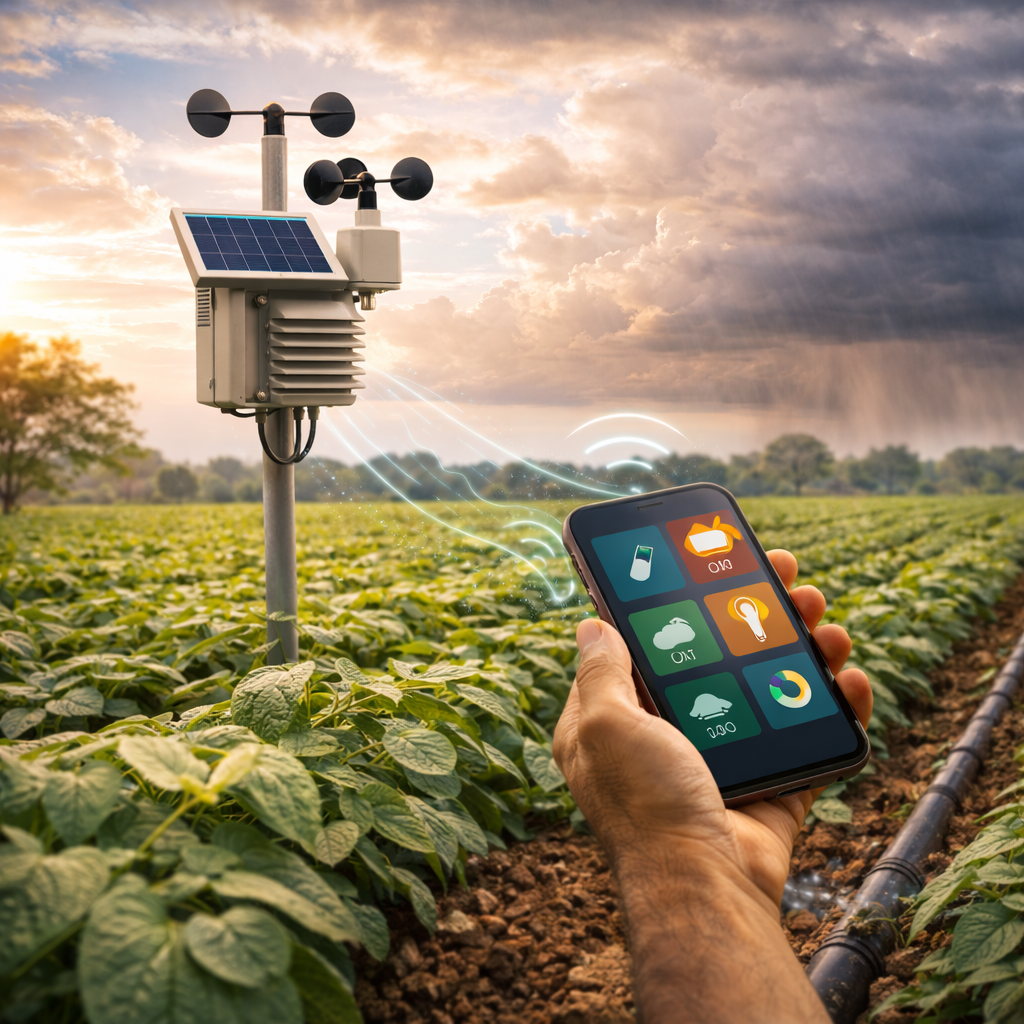
Embedded weather stations collect climate data. Telemetry then sends this information to farmers, helping them plan irrigation and crop protection.
3. Pump and Motor Monitoring
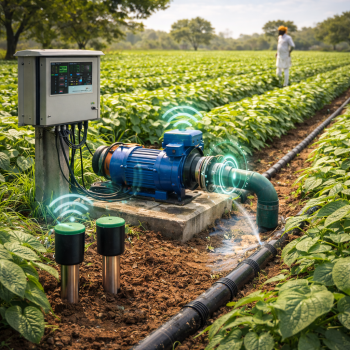
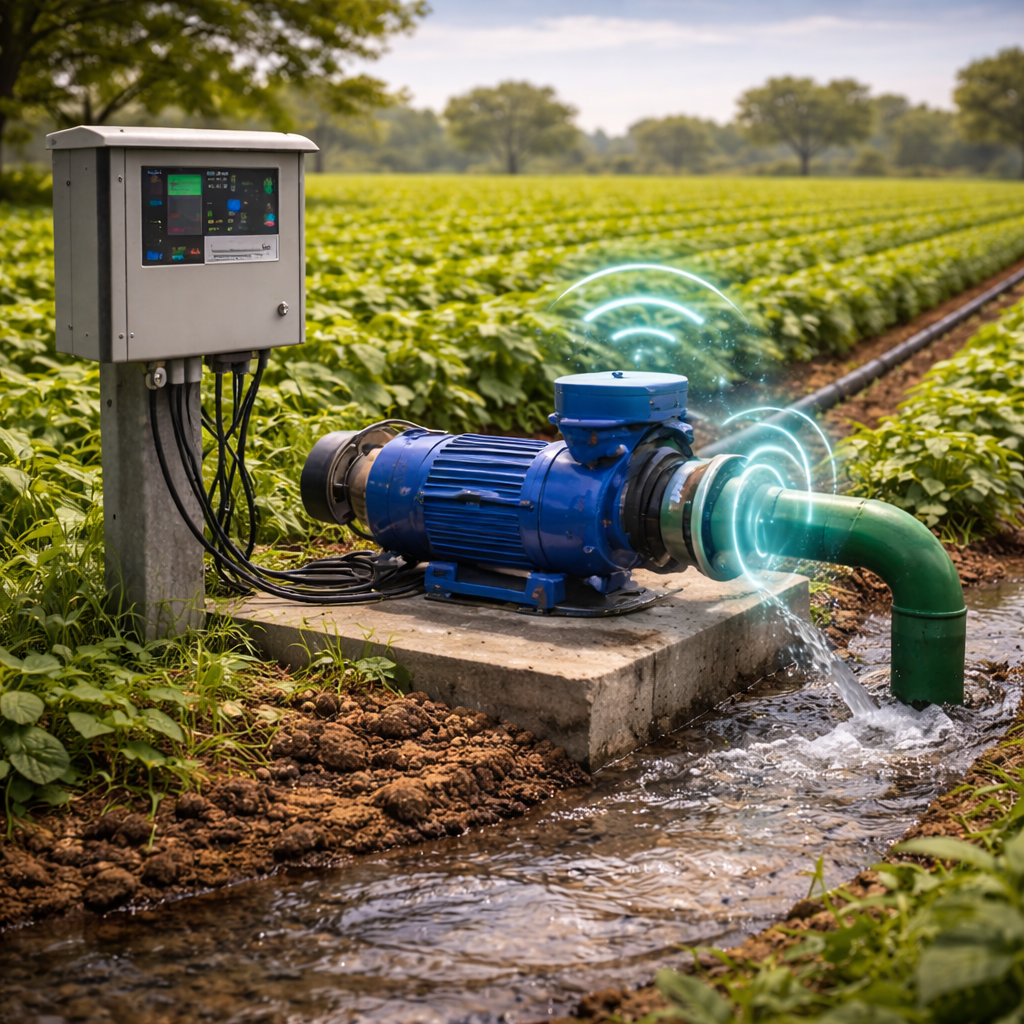
Telemetry-based monitoring helps track pump health and usage. Consequently, maintenance costs are reduced, and system life increases.
4. Greenhouse Automation
In greenhouses, embedded systems control temperature and humidity. With telemetry, farmers can monitor conditions remotely and ensure optimal growth.
Challenges in Implementing Smart Agriculture
Although smart agriculture offers many benefits, some challenges still exist.
These challenges include:
Initial investment cost
Limited technical awareness
Network connectivity issues
However, affordable embedded systems and improved telemetry technologies are gradually solving these problems.
How Sai AgroTel Supports Smart Agriculture in India
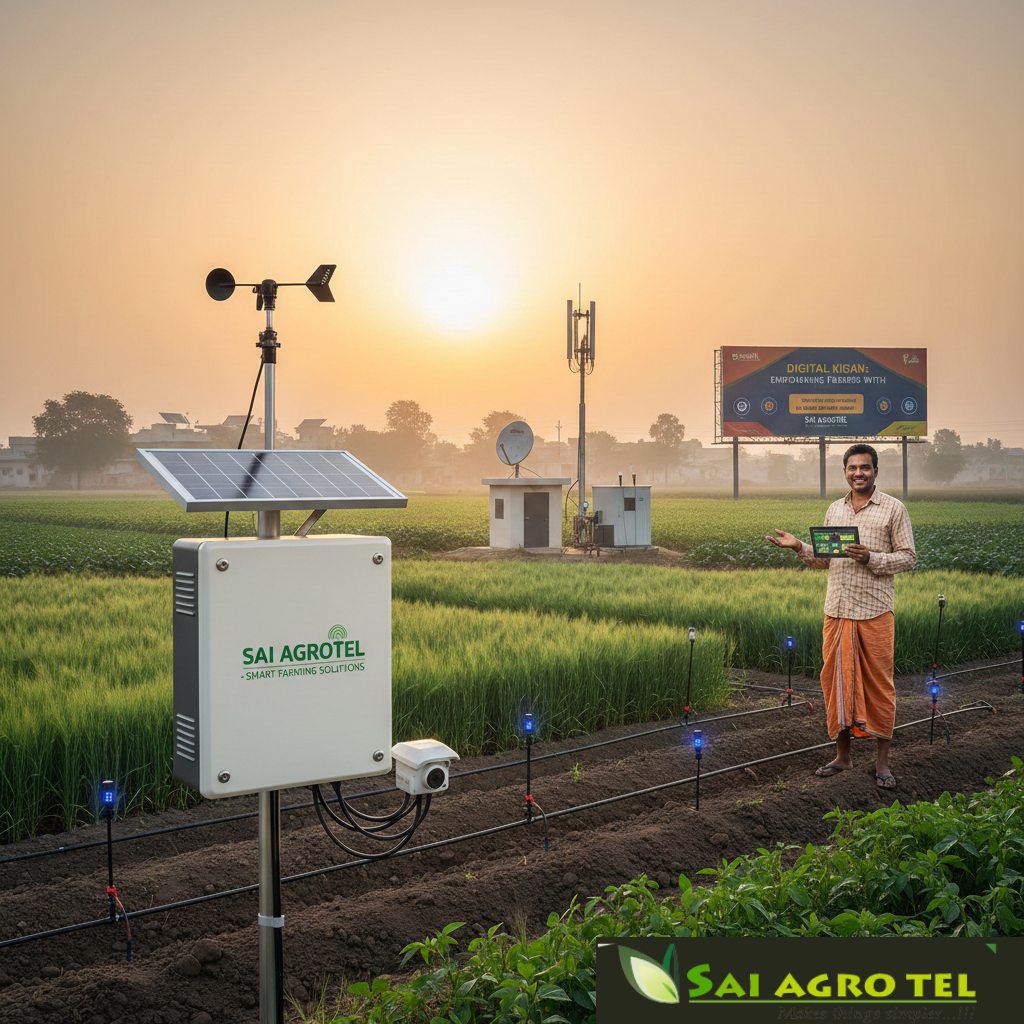
Sai AgroTel actively supports smart agriculture by developing reliable embedded and telemetry solutions. The company focuses on building products that work well in Indian conditions.
Key areas of support include:
Custom embedded hardware design
Firmware and embedded software development
IoT and telemetry solutions
Smart irrigation and automation systems
Because of this approach, Sai AgroTel helps farmers and agribusinesses adopt smart farming smoothly.
Why Choose Indian Embedded & Telemetry Solutions
Indian technology companies understand local agricultural challenges better. Therefore, solutions developed in India are more practical and cost-effective.
Sai AgroTel offers:
Local support
Customized solutions
Field-tested products
Long-term reliability
This makes it a trusted partner for smart agriculture projects.
Future of Smart Agriculture in India
The future of Indian agriculture is closely connected to technology adoption. As embedded systems and telemetry solutions become more affordable, smart farming will expand rapidly.
Future developments include:
Advanced sensor networks
Solar-powered automation systems
Data-driven farming models
These innovations will help farmers improve income and sustainability.
Conclusion
Smart agriculture is transforming farming in India by improving efficiency and reducing resource wastage. Embedded systems and telemetry solutions play a vital role in enabling automation, monitoring, and remote control. By adopting these technologies, farmers can achieve better productivity and long-term sustainability. With practical and reliable solutions, Sai AgroTel is helping India move towards smarter agriculture.