
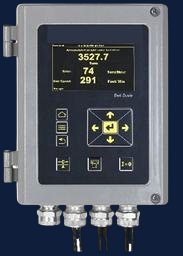
Industrial weighing
In-motion weighing controller
- Our scope
- Hardware, firmware and software
- Outcome
- Field-deployed in weighbridges and in-line checkweighers, with event-wise readout in the cloud.
Engineering service
Stable firmware for ARM, PIC, AVR and other microcontrollers, and embedded software on Android, Linux and Windows — built to keep running through power dips, noise and unreliable communication.
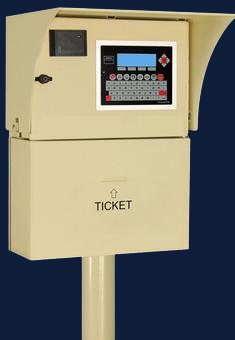
Scope
The exact list, file formats and ownership are confirmed in your project proposal.
At a glance
Embedded firmware, companion applications, industrial PC software and cloud software are separate pieces of work, each with its own deliverables.
| Layer | What we build | Platforms and tools |
|---|---|---|
| Embedded firmware (on the device) | Bootloaders, device drivers, middleware and communication stacks; control, scheduling, PID loops and fault handling; emWin GUIs where the product has a display | C and C++ on ARM Cortex-M3, M4 and M7 (including NXP LPC1788), ESP32, PIC and AVR · RTOS: Keil RTX or FreeRTOS · ESP-IDF framework on ESP32 · embedded Linux |
| Companion applications (phone and PC) | Android apps that configure, monitor and control the device over Bluetooth, Wi-Fi or cellular; Windows tools such as configuration utilities, firmware flashers, calibration assistants and data loggers | Kotlin, Java, Flutter · .NET, Python |
| Industrial and PLC software (PC) | SCADA bridges, PLC test harnesses, Modbus polling tools, protocol simulators and HMI panels | .NET operator software on the inspection-system project |
| Cloud and web software | Web dashboards and back-end services for device telemetry, alerts, history and commands | React, Python Flask, MQTT, REST APIs · Azure storage and dashboards on the weighing-controller project |
Process
Modes, interfaces, timing and fault handling written down.
CheckpointSpecification sign-off
Tasks, drivers, communication stack and memory plan.
CheckpointArchitecture review
Functions delivered incrementally on real hardware.
CheckpointMilestone demonstrations
Long-run, fault, noise and power-dip testing.
CheckpointTest results against specification
Production firmware with release notes.
CheckpointRelease approval
Evidence
Driptel’s firmware delivers GSM control, automatic and manual modes, and MTR, Cycle, RTC and Sequential irrigation settings. Gardentel’s firmware provides Wi-Fi control from an Android app with automatic notifications.
Industrial weighing
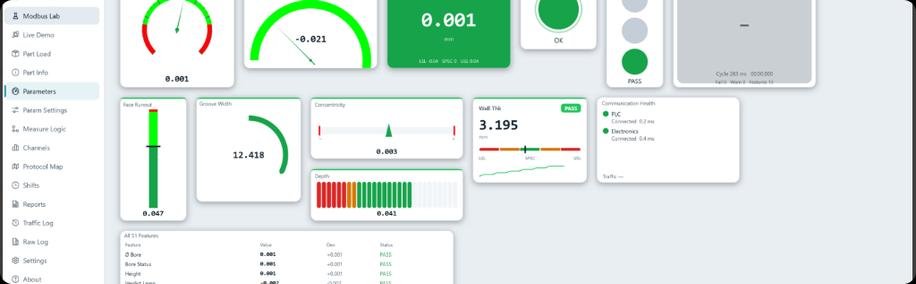
Industrial inspection
Four boards, a six-layer LPC1788 controller, RTOS firmware and cloud readout for weighbridges and in-line checkweighers.
The short list Sai Agro Tel asks for before a first reply: what the device must do, where it will be used, the stage, and the quantity.
FAQs
Can’t find your answer? Ask the team directly.
ARM Cortex-M3, M4 and M7 (including NXP LPC1788), Espressif ESP32, Microchip PIC, AVR and other microcontrollers, chosen for the product’s performance, power and cost needs. Tools include Keil µVision, MPLAB X, Espressif IDE and GCC-based toolchains.
Yes. We use Keil RTX and FreeRTOS, the ESP-IDF framework on ESP32, and embedded Linux, along with drivers and communication protocols.
Yes. We build Android companion apps that control, monitor and configure field hardware over Bluetooth, Wi-Fi or cellular, as well as Windows tools and web dashboards.
It runs for long hours, handles power dips and noisy inputs, reports what went wrong instead of freezing, and returns to a safe state after a fault.
Start a conversation
Share what you are building. The more context you give, the more useful our first reply can be.